
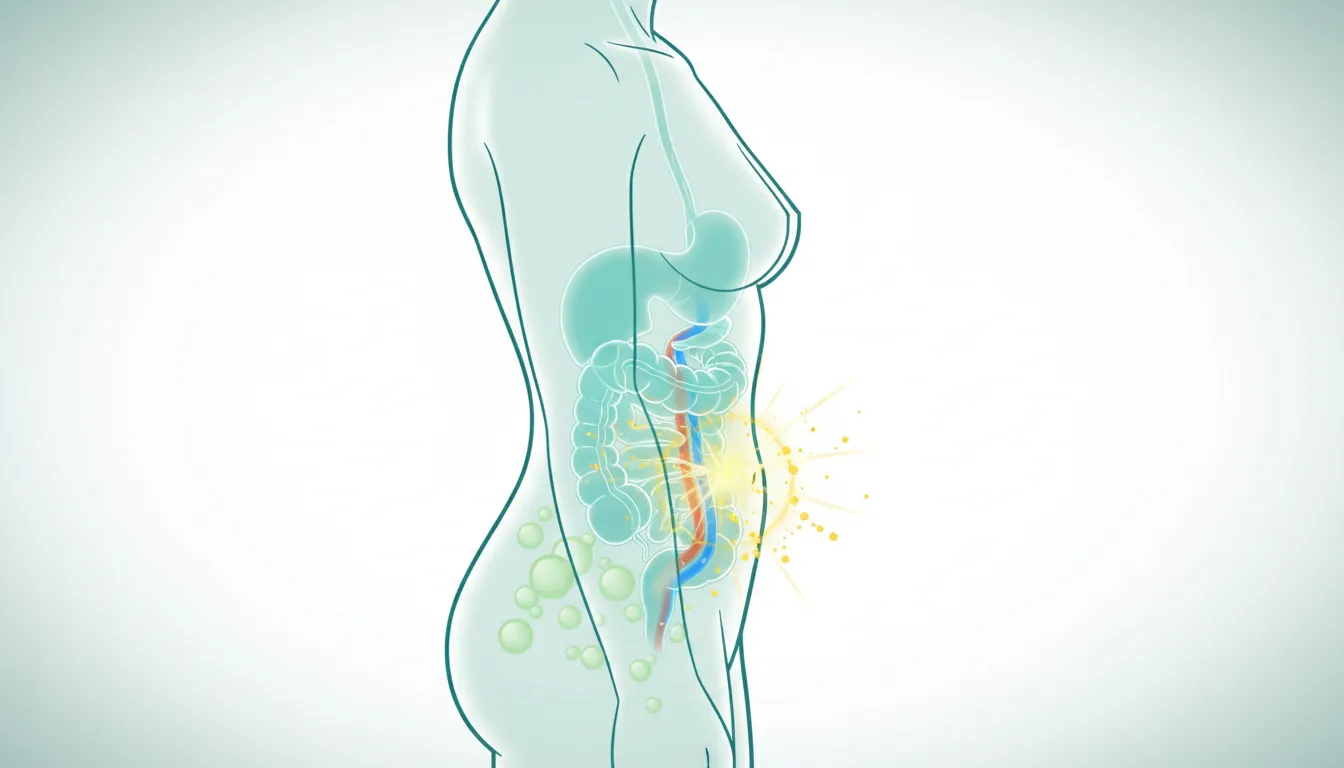
If you are gaining stubborn belly fat, feeling bloated after meals, and dealing with constipation, this is not just annoying. It can be a sign that your body is stuck in a vicious cycle.
Most people assume the answer is more fiber, more salads, more water, or another supplement. But for a lot of people, that approach does not solve the real problem. In some cases, it can even make things worse.
The issue may not be a fiber problem at all. It may be a fat problem, or more specifically, a problem with the right kind of fat and how your digestive system is functioning.
When your body cannot eliminate waste efficiently, that waste does not just sit there harmlessly. It creates a toxic backlog that affects digestion, inflammation, energy, cravings, and even fat storage.
Table of Contents
- The hidden connection between constipation, bloating, and belly fat
- Why your body may be storing fat on purpose
- What healthy bowel movements should actually look like
- Why more fiber is not always the answer
- Why olive oil may help constipation and bloating
- The clinical evidence discussed for extra virgin olive oil
- What can change when your body finally starts releasing again
- Why the quality of olive oil matters so much
- How to use olive oil for faster digestive support
- Why olive oil can work differently depending on how you use it
- What to do if nothing happens
- How to know if this may be your issue
- The bigger lesson: you are not broken
- FAQ
The hidden connection between constipation, bloating, and belly fat
Here is the pattern a lot of people get trapped in.
Waste sits in the gut too long. Instead of leaving the body, some of the toxins, waste byproducts, and hormones can be reabsorbed. That puts more stress on the body. Stress leads to inflammation. Inflammation encourages the body to store more fat as a protective response. More body fat can worsen digestion. Poor digestion leads to more constipation and bloating. Then the cycle repeats.
This is why belly fat and sluggish digestion often show up together.
A simple way to picture it is like leaving garbage in a hot house for days. At first, it seems contained. Then it starts to spread. The smell leaks out. Bacteria multiplies. Now the whole environment is affected.
That is the basic idea behind what happens when waste sits too long in the digestive tract. Your body is not broken. Your system is just stuck.
Why your body may be storing fat on purpose
This part matters because a lot of people blame themselves.
Your body is always trying to protect you. Survival is the top priority. If it senses inflammation or internal stress, it may store fat as a defensive mechanism.
So if your digestion is backed up and your body is inflamed, the fat gain is not random. It is part of a larger protective response.
That does not mean you have to stay there. It means the strategy should focus on helping the body release, not just forcing it harder with more restriction, more willpower, or more punishment.
What healthy bowel movements should actually look like
A lot of people normalize constipation because it has been going on for so long.
But if you skip days without a bowel movement, that is a red flag.
A simple benchmark used here is this: you should be eliminating about as often as you are eating full meals.
If you eat two full meals a day, ideally you should be having two bowel movements a day.
If you eat three full meals a day, ideally you should be having three bowel movements a day.
If that is not happening, constipation is likely part of the picture.
Other signs your system may be stuck include:
Bloating after meals
Feeling heavy or backed up
Sluggish digestion
Brain fog after eating
A sense that food just sits there
That is not normal digestion. That is stagnation.
Why more fiber is not always the answer
Fiber has benefits, but it is not a cure-all.
If your digestive system is already slow and backed up, adding more bulk without improving movement can leave you feeling even more bloated. Your gut does not just need more material passing through it. It needs the proper signal to release.
That is where one simple tool can change the game for many people: extra virgin olive oil.
Why olive oil may help constipation and bloating
Not just any olive oil. The focus here is on high-quality, high-polyphenol extra virgin olive oil.
The idea is surprisingly simple. Olive oil helps support movement and release in the digestive tract without forcing the body the way harsh laxatives can.
Think of your digestive system like a conveyor belt. When it is working properly, things move through. When it slows down, material starts piling up. Then everything behind it gets backed up too.
High-quality extra virgin olive oil may help in three key ways:
1. It lubricates the digestive tract
This can help waste move more easily through the system instead of sitting and stagnating.
2. It stimulates bile production
Bile acts like a natural release signal from the liver and digestive system. This helps support elimination.
3. It activates gut motility
Rather than forcing bowel movements, it helps the body do what it was designed to do: move and eliminate waste efficiently.
The clinical evidence discussed for extra virgin olive oil
One of the most interesting parts of this approach is that it was not presented as pure theory.
In one clinical trial, 140 people with chronic constipation were split into two groups for four weeks:
One group took extra virgin olive oil daily
The other group took refined olive oil in the same amount
Researchers used established clinical scoring systems, including the Rome III criteria and the Bristol Stool Scale, to measure digestive function.
The reported result was dramatic. Constipation severity scores in the extra virgin olive oil group dropped from about 11 to 3.4, which is close to a 70 percent reduction in four weeks.
Another study compared olive oil to mineral oil, a common constipation treatment used in medical settings. The reported outcome was that olive oil worked just as well.
That is a big deal. Something that may already be in your kitchen can perform like a serious therapeutic tool when used properly.
What can change when your body finally starts releasing again
When digestion starts moving the way it should, the benefits can go far beyond the bathroom.
According to the explanation given, this is what many people notice:
Less bloating and abdominal pressure
A lighter, flatter feeling in the stomach
Better energy because the body is no longer dealing with backed-up waste
Fewer cravings as gut-brain signaling improves
Easier fat loss because inflammation and digestive stress go down
This is the real point. Fat loss becomes easier when the body is no longer inflamed, overwhelmed, and stuck.
Why the quality of olive oil matters so much
This is where many people go wrong.
Someone tries olive oil, feels nothing, and concludes it does not work. But the problem may be the product itself.
A lot of olive oil on the market is low quality. It can be oxidized, diluted, mixed with inflammatory seed oils, or simply too old to contain meaningful levels of beneficial compounds.
The key compounds being emphasized are polyphenols. These are what give extra virgin olive oil many of its standout properties.
If the olive oil has lost 30 to 50 percent of its polyphenol content over time, it may do very little. Worse, if it has been cut with poor-quality oils, it could add stress instead of reducing it.
What to look for in a quality extra virgin olive oil
First harvest pressed, which tends to have higher polyphenol content
Cold pressed, which helps preserve the oil without chemical processing
Dark glass bottle, which protects the oil from light and helps preserve freshness
A strong peppery taste, often with a throat burn or fuzzy feeling on the tongue
That peppery burn is not a flaw. It is often a clue that the oil is rich in polyphenols.
If your olive oil goes down completely smooth with no bite, it may not be the kind of olive oil being recommended for this purpose.
How to use olive oil for faster digestive support
Most people use olive oil like a food, which is great for general health. But for the digestive effect being discussed here, timing matters.
The therapeutic approach
Take one tablespoon first thing in the morning on an empty stomach, ideally before coffee.
Sometimes this is combined with:
A squeeze of lemon
Or a tablespoon of apple cider vinegar
This is meant to act as a direct signal to the digestive system. It stimulates bile, activates motility, and supports release.
Some people notice movement within hours.
The nutritional approach
You can also use high-quality olive oil throughout the day by:
Drizzling it on salads
Adding it to meat or vegetables
Putting it into coffee or tea
Cooking with it, especially if it is high in polyphenols
This approach works more gradually. It still supports digestion and helps reduce inflammation over time, but it is less likely to create the immediate release effect some people are looking for.
Why olive oil can work differently depending on how you use it
This is an important distinction.
Olive oil can support digestion in at least two main ways:
Therapeutically, when taken first thing in the morning on an empty stomach for a quicker effect
Nutritionally, when used regularly with meals for slower, ongoing support
So when someone says, "I already use olive oil and it did nothing," the issue may not be olive oil itself. It may be:
Not enough was used
It was not taken at the right time
The quality was too low
They expected a fast result from a slower method
What to do if nothing happens
If you try this and do not notice a result, three possible reasons were highlighted:
You did not take enough. In that case, the amount may need to be increased.
You did not take it at the right time. Morning on an empty stomach was presented as the best time for faster movement.
You did not use the right kind. It needs to be truly high-quality, high-polyphenol extra virgin olive oil.
The central idea is that when the body gets the right signal, it responds.
How to know if this may be your issue
You do not need to overcomplicate this.
If you are not going to the bathroom at least once per day and fully clearing out, that is a major clue.
If you feel bloated, heavy, sluggish, or mentally foggy after meals, that is another sign your system may not be moving the way it should.
Instead of jumping to extreme diets, psyllium husk, or more dependence on discipline and willpower, the recommendation here is simple: start by helping the body release.
The bigger lesson: you are not broken
This message matters more than any single food or supplement.
If your body is holding on to fat, feeling inflamed, and struggling to eliminate, it does not automatically mean you are lazy, weak, or doing everything wrong.
Often, the effort is not the problem. The system is.
When the body cannot release, it gets stuck. When you restore that function, things can change quickly.
That is why improving digestion is not just about comfort. It can be one of the missing pieces for reducing bloating, calming inflammation, restoring energy, and making fat loss easier.
FAQ
Is constipation really connected to belly fat?
According to the explanation shared here, constipation can contribute to a cycle of toxin buildup, inflammation, and fat storage. When waste sits too long in the gut, the body experiences more internal stress, and that can make fat loss harder.
How often should a healthy person have a bowel movement?
A practical benchmark offered is that bowel movements should happen about as often as full meals are eaten. If you eat two full meals, aim for two bowel movements. If you eat three full meals, aim for three.
Why can more fiber make bloating worse?
If the digestive system is already sluggish, adding more bulk can increase pressure and bloating without fixing movement. The gut may need better motility and a signal to release, not just more fiber.
What type of olive oil is best for digestion support?
The recommendation is high-quality, high-polyphenol extra virgin olive oil. First harvest, cold pressed, and dark glass packaging are all signs that the oil may be better preserved and more potent.
How should olive oil be taken for quicker results?
The suggested method is one tablespoon first thing in the morning on an empty stomach, before coffee. Some people add lemon juice or apple cider vinegar.
Can olive oil still help if it is used with meals?
Yes. Using olive oil on salads, meats, vegetables, or even in coffee or tea can still support digestion and lower inflammation. It is simply a slower, more nutritional approach rather than a faster therapeutic one.
How can you tell if olive oil is high in polyphenols?
A strong peppery taste, a slight burn in the throat, or a fuzzy feeling on the tongue are all signs often associated with higher polyphenol content.
What if olive oil does not work for me?
Three common reasons were given: the amount may have been too small, the timing may have been wrong, or the olive oil may not have been truly high quality and high in polyphenols.
Disclaimer: This information is for educational purposes only and is not medical advice. If you think you have a medical condition or ongoing digestive issue, consult a licensed physician.