
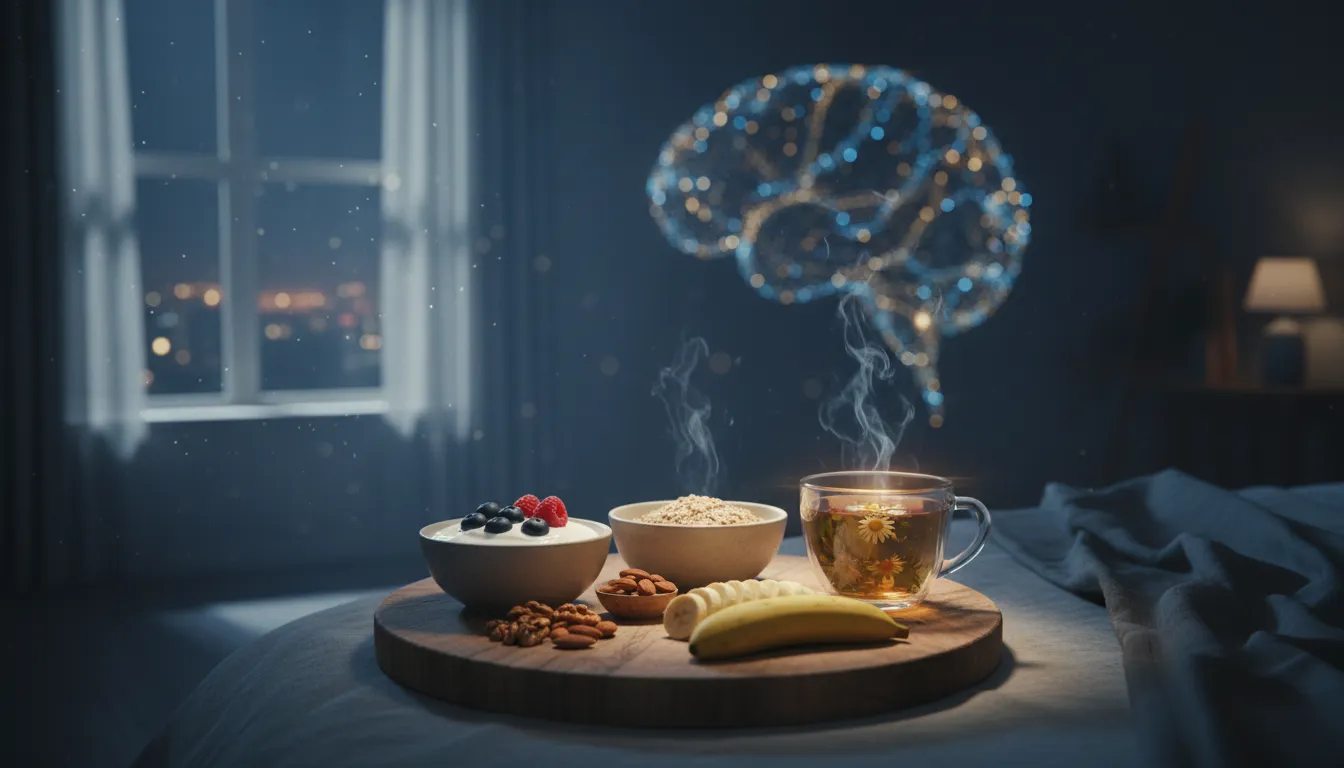
Here is a truth that deserves far more attention than it gets: the final hour or two before sleep is not nutritionally trivial. For the aging brain, it may be one of the most important windows of the day.
While you sleep, your brain is not shutting down. It is actively repairing tissue, consolidating memory, regulating inflammation, clearing waste, and strengthening neural connections. If you give it the right raw materials before bed, you can support that process. If you give it the wrong ones, or nothing at all, you may be missing a powerful opportunity to protect memory and cognitive function.
That matters especially after 60, when sleep architecture changes, melatonin drops, protein utilization becomes less efficient, and the brain becomes more vulnerable to inflammation and age-related memory decline.
What follows is a practical, science-grounded guide to five foods that stand out for bedtime brain support. These are not exotic supplements or expensive “brain hacks.” They are real foods, many of them already sitting in kitchens and grocery stores right now.
Used strategically, they may help improve sleep quality, support overnight brain detox, and give the brain what it needs to wake up sharper.
Table of Contents
- Why bedtime nutrition matters more as you get older
- What the brain is doing while you sleep
- 5. Tart cherry juice for melatonin and brain-calming anthocyanins
- 4. Greek yogurt for overnight protein delivery and melatonin support
- 3. Walnuts for omega-3 support, polyphenols, and nighttime brain maintenance
- 2. Raw honey for BDNF, cortisol balance, and hippocampal support
- 1. Fatty fish for direct DHA, EPA, and the strongest bedtime brain support
- The most effective bedtime combinations
- Common bedtime eating mistakes that work against the brain
- A simple nightly routine for better sleep and brain health
- The bigger message: cognitive decline is not something to surrender to
- FAQ
Why bedtime nutrition matters more as you get older
Many people think of brain health as something influenced only by long-term habits. That is true, but it is not the whole story. The timing of what you eat matters too.
Researchers from the University of Toronto reported findings showing that targeted nutrition in the evening, specifically within 90 minutes of sleep, improved memory consolidation scores by up to 43% in adults over 65 compared with those who either ate nothing or ate poorly before bed.
That is not a subtle difference. It points to something very practical: your brain appears to respond to the nutritional environment you create before sleep.
There are several reasons this becomes more important with age:
Melatonin production declines, often significantly after 65.
Neuroinflammation rises, slowing communication between brain cells.
Protein metabolism becomes less efficient, reducing access to amino acids needed for repair.
Omega-3 conversion drops, making direct dietary sources more important.
Deep sleep often becomes harder to maintain, even though this is when memory consolidation and waste clearance happen.
Put simply, the brain still knows how to repair itself. The problem is that with age, it often gets fewer of the ingredients it needs, at the very time it needs them most.

What the brain is doing while you sleep
Before getting into the foods themselves, it helps to understand what the sleeping brain is trying to accomplish overnight.
1. Memory consolidation
During deep slow-wave sleep, the brain stabilizes and stores the experiences of the day. Short-term impressions are converted into longer-lasting memories. If sleep is poor, fragmented, or chemically disrupted, this process suffers.
2. Glymphatic clearance
The brain has a kind of nighttime cleaning system, often called the glymphatic system. During deep sleep, this network helps flush out metabolic waste, including compounds associated with cognitive decline, such as amyloid beta.
3. Synaptic repair
Memories are encoded in physical connections between neurons called synapses. Those structures require amino acids, healthy fats, and anti-inflammatory support to stay strong.
4. Inflammation control
Chronic low-grade inflammation in the brain, often called neuroinflammation, can interfere with signaling and memory. One of the best times to calm that inflammatory environment is before a long overnight fast.
With that foundation in place, here are the five foods that can meaningfully support those processes.
5. Tart cherry juice for melatonin and brain-calming anthocyanins
Tart cherry juice may not be the first thing that comes to mind when thinking about memory support, but it has two properties that make it especially valuable at night.
First, tart cherries, especially the Montmorency variety, are one of the richest natural food sources of melatonin. Second, they contain anthocyanins, anti-inflammatory plant compounds that can cross the blood-brain barrier.
That combination matters.
As the brain ages, neuroinflammation acts like a traffic jam inside the system. Signals still try to get through, but the process becomes slower and less efficient. Memory formation and recall begin to feel less reliable. The anthocyanins in tart cherry juice appear to help reduce inflammatory proteins called cytokines that contribute to this problem.
At the same time, the naturally occurring melatonin supports sleep architecture, particularly deep slow-wave sleep, which is when the brain performs much of its overnight memory consolidation work.
A study published in the European Journal of Nutrition found that adults over 65 who drank 8 ounces of tart cherry juice nightly for 12 weeks had a 24% improvement in sleep efficiency, along with better scores on episodic memory tests.
For older adults, this can be especially helpful because natural melatonin production may drop by as much as 50% compared with younger years.
How to use it
Drink 8 ounces of pure unsweetened tart cherry juice.
Have it 60 to 90 minutes before bed.
Look specifically for Montmorency tart cherry on the label.
Avoid versions with added sugar.
There is also a useful trick here: pair tart cherry juice with a small amount of healthy fat, such as a few walnut halves. The anthocyanins are more efficiently absorbed in the presence of fat.

4. Greek yogurt for overnight protein delivery and melatonin support
Greek yogurt earns its place on this list for a reason many people overlook. Yes, it contains calcium and protein, but its real bedtime value comes from tryptophan and casein.
Tryptophan is an amino acid the body uses to produce serotonin, which in turn can be converted into melatonin. So when you eat Greek yogurt before bed, you are helping restock the brain’s biochemical supply line for sleep regulation.
Then there is the protein issue.
After about age 70, the body becomes less efficient at using dietary protein. This is sometimes referred to as anabolic resistance. Muscles are affected by it, but so is the brain. That means older adults often need smarter protein timing, not just more protein overall.
Greek yogurt is rich in casein, a slow-digesting protein that releases amino acids gradually over 6 to 8 hours. That is ideal for nighttime, because it gives the body a longer window to absorb and use those compounds while sleeping.
For the brain, that sustained release means a steadier supply of building blocks needed to repair synaptic connections, the physical sites where memory lives.
One cup of full-fat Greek yogurt provides roughly 17 to 20 grams of protein, much of it casein. Research from Maastricht University has highlighted how evening protein can be utilized differently from protein eaten earlier in the day, and Florida State University reported that older adults consuming casein protein before bed showed better overnight recovery markers and improvements in cognitive flexibility.
Cognitive flexibility is the brain’s ability to switch between tasks, ideas, or mental sets. It is one of the first capacities to weaken with aging, which makes protecting it especially worthwhile.
How to use it
Choose 1 cup of full-fat Greek yogurt.
Eat it about 45 minutes before bed.
Add a few blueberries if desired.
A small amount of raw honey can work well here too.
Avoid high-sugar toppings like granola, syrups, or refined cereals.
The goal is to support repair, not trigger a late-night blood sugar spike that disrupts sleep and works against the brain’s overnight maintenance.
3. Walnuts for omega-3 support, polyphenols, and nighttime brain maintenance
If there is one nut that deserves special attention for brain health, it is the walnut.
Not mixed nuts. Not almonds. Not cashews. Specifically walnuts.
Walnuts contain alpha-linolenic acid (ALA), a plant omega-3 fat, along with polyphenols and ellagic acid. They are uniquely positioned among nuts when it comes to cognitive health.
One patient story captures why this matters. Margaret, a 74-year-old retired school teacher from Vermont, had become increasingly frightened by small but persistent changes in memory. She was misplacing things, losing her train of thought, and forgetting names she had known for decades. After beginning a broader evening nutrition protocol that included a small handful of walnuts each night, she described the experience this way:
“It feels like someone turned a light back on.”
No responsible clinician should claim miracles from a single food. But stories like that are compelling because they line up with what the nutritional neuroscience literature continues to show.
Walnuts supply precursors that the body can convert toward DHA, a fatty acid central to brain structure. DHA makes up a major portion of the brain’s structural fat and plays a critical role in the health of neuronal membranes. Those membranes determine how efficiently signals move between brain cells.
When membrane quality declines, communication becomes slower and less precise. That translates into the kind of frustrating, everyday cognitive symptoms many people dismiss as “just getting older.”
Research published in the Journal of Nutrition, Health, and Aging found that older adults who regularly consumed walnuts had better memory scores, faster processing speed, and stronger mental flexibility. Another analysis from UCLA, involving more than 600 adults with an average age of 68, found that higher walnut intake was associated with a 52% lower risk of poor cognitive function on standardized testing.
Timing also appears to matter.
During deep sleep, the glymphatic system depends on healthy brain cell membranes to move fluid effectively through brain tissue. Walnuts help supply fats and polyphenols that support that process, making them an especially smart evening food.
How to use them
Eat 1 to 1.5 ounces, about a small handful or 14 walnut halves.
Have them about 60 minutes before sleep.
Choose raw or dry roasted walnuts.
Avoid heavily salted or oil-roasted versions.
One of the best combinations in this entire routine is walnuts with tart cherry juice. The anthocyanins from the juice and the polyphenols from the walnuts create a compounded anti-inflammatory effect that is more powerful than either one alone.
2. Raw honey for BDNF, cortisol balance, and hippocampal support
Honey is often misunderstood in nutrition conversations. The common assumption is that all sweetness before bed is harmful. That is not the whole picture.
The key is type and dose.
Raw, unprocessed honey, especially manuka honey or local raw wildflower honey, contains a flavonoid called pinocembrin. This compound has been studied for its neuroprotective effects and has been linked to the growth of new neurons in the hippocampus, the part of the brain central to forming and storing memories.
For a long time, science believed neurogenesis, or the formation of new brain cells, stopped in early adulthood. That view has changed. The hippocampus remains capable of generating new neurons throughout life, and this process is influenced by what you eat.
Raw honey appears to support it. Refined sugar does the opposite.
This matters because the hippocampus tends to shrink with age. After 75, that shrinkage can proceed at roughly 1 to 2% per year without protective measures. Since the hippocampus is so central to episodic memory, this is one reason people begin forgetting conversations, appointments, or names.
Another reason honey stands out is its effect on BDNF, or brain-derived neurotrophic factor. If you want a practical image, think of BDNF as fertilizer for the brain. It helps neurons grow, survive, repair, and connect. Adults over 60 generally have lower BDNF levels than younger adults, and the drop is associated with cognitive decline.
Raw honey has also been linked to more favorable nighttime cortisol patterns. Elevated cortisol at night is deeply disruptive to the aging brain. It interferes with deep sleep and can damage hippocampal neurons over time. A modest dose of raw honey before bed may trigger a gentle insulin response that helps lower circulating cortisol and create a calmer chemical environment for overnight repair.
Research from the University of Malaya found that people taking raw honey before bed had lower midnight cortisol levels and better memory test performance the next morning compared with controls.
There is also a human side to this. Robert, a 71-year-old retired engineer from Scottsdale, had quietly stopped doing crossword puzzles because they had become too frustrating. He began a structured evening brain routine with raw honey as one of its central elements. About 10 weeks later, he reported that he had started doing them again, and his wife told him he seemed like himself.
That is the real goal here. Not abstract optimization. Real life reclaimed.
How to use it
Take 1 to 2 teaspoons of raw, unfiltered honey.
Use it about 30 minutes before bed.
Do not exceed 2 teaspoons, since too much can spike insulin too strongly.
Do not heat it in very hot tea or water. High heat can damage active compounds.
A particularly effective pairing is raw honey stirred into full-fat Greek yogurt. The casein slows the release of honey’s natural sugars and may extend its cortisol-lowering effect over more of the night.

1. Fatty fish for direct DHA, EPA, and the strongest bedtime brain support
The number one food on this list is the one many older adults have been told to approach cautiously: fatty fish.
Specifically, wild-caught salmon, sardines, or mackerel eaten as a light evening meal or substantial snack about two hours before bed.
If that recommendation feels surprising, it is because common nutrition advice has often treated evening eating as a blanket problem. But the research tells a more nuanced story. The issue is not simply whether you eat before bed. The issue is what you eat and why.
Fatty fish is the richest dietary source of preformed DHA and EPA, the omega-3 fats that are structurally essential to the brain. These are not optional add-ons. They are literal building materials for neuronal membranes and synapses.
And here is the critical aging issue: after 60, the body’s ability to convert plant omega-3s into the DHA the brain actually uses drops dramatically, by roughly 60% to 70%. That means foods like walnuts are still beneficial, but they often cannot fully cover the brain’s DHA needs on their own in later life.
Fatty fish solves that problem by supplying DHA directly.
This matters because every thought, every memory, and every signal between neurons depends on membrane health. If membrane integrity declines, brain communication loses speed and precision.
One of the strongest findings on this comes from Rush University Medical Center and the MIND diet research. Older adults who ate fish at least once a week had brains that functioned as though they were 11 years younger compared with those who rarely or never ate fish.
That is an extraordinary result.
The bedtime timing matters because the glymphatic system does its heaviest work during deep sleep, and that process is more efficient when brain cell membranes are rich in DHA. Researchers at the University of Rochester found that glymphatic clearance may be up to 60% more efficient during sleep in the presence of adequate DHA levels.
Fatty fish also brings several additional advantages:
Astaxanthin in wild salmon, a potent antioxidant that crosses the blood-brain barrier.
Vitamin D3, important for neurological function.
Vitamin B12, frequently low in adults over 60 and strongly linked to memory problems when deficient.
Selenium, which supports antioxidant defenses and neurological health.
Astaxanthin deserves special mention. It helps protect the mitochondria inside neurons, the tiny structures that generate energy for brain cells. As these mitochondrial systems age, they produce less energy and more oxidative stress. Astaxanthin helps counter that pattern.
Long-term data supports the overall picture. Researchers at the Karolinska Institute followed more than 1,000 adults aged 60 to 90 for seven years and found that those with the highest omega-3 blood levels had 73% less hippocampal shrinkage than those with the lowest levels.
That is not a trivial difference. It speaks directly to preserving the memory center of the brain.
How to use it
Choose wild-caught Alaskan salmon, Atlantic sardines, or Atlantic mackerel.
Aim for a 4 to 5 ounce serving.
Eat it about 2 hours before bed.
Prepare it simply: baked, steamed, or plain from the can in the case of sardines.
Avoid heavy sauces, breading, and frying.
Fresh fish is excellent, but high-quality canned salmon and sardines are also effective, affordable, and convenient.

The most effective bedtime combinations
These foods are helpful individually, but some pairings appear especially smart because they support different parts of the brain’s overnight repair process at the same time.
Option 1: Tart cherry juice + walnuts
This combination supports anti-inflammatory signaling, melatonin support, and membrane health.
8 ounces tart cherry juice
Small handful of walnuts
Best timing: 60 to 90 minutes before bed
Option 2: Greek yogurt + raw honey
This pairing delivers casein protein, tryptophan, and a gentle cortisol-lowering effect.
1 cup full-fat Greek yogurt
1 to 2 teaspoons raw honey
Best timing: 30 to 45 minutes before bed
Option 3: Fatty fish + raw honey
This may be the strongest evening brain protocol of the list, especially for older adults needing direct DHA support.
4 to 5 ounces salmon, sardines, or mackerel
1 to 2 teaspoons raw honey 30 minutes later
Best timing: fish about 2 hours before bed, honey 30 minutes after
Option 4: The full evening brain protocol
For those who tolerate all of these foods well, a complete protocol could include:
Fatty fish for direct DHA and EPA
A small handful of walnuts for polyphenols and additional omega-3 support
1 to 2 teaspoons raw honey for BDNF and cortisol management
Together, this creates a coordinated nutritional strategy for structural repair, neuron growth support, waste clearance, inflammation control, and better overnight brain recovery.
Common bedtime eating mistakes that work against the brain
Just as important as choosing the right foods is avoiding the wrong ones. Several common bedtime habits can actively undermine memory, sleep quality, and overnight brain detox.
1. Sugary snacks
Cookies, sweet cereals, ice cream, and desserts may feel comforting, but they can spike insulin, destabilize sleep, and increase inflammation.
2. Refined carbohydrates
Granola bars, crackers made from refined flour, and processed snack foods can create the same blood sugar turbulence as sweets.
3. Heavy fried food
These meals are harder to digest and introduce inflammatory fats that compete directly with the repair process you are trying to support.
4. Eating without strategy
Eating too much too late can impair sleep. But eating nothing at all, especially if your evening meal was light or early, may also deprive the brain of nutrients it needs for overnight work.
The goal is not a giant meal. It is a targeted nutritional signal.
A simple nightly routine for better sleep and brain health
If you want a practical way to apply all of this, keep it simple. Consistency matters more than complexity.
Two hours before bed: eat a light serving of fatty fish if using it that night.
60 to 90 minutes before bed: consider tart cherry juice, with or without walnuts.
45 minutes before bed: Greek yogurt can fit well here.
30 minutes before bed: use 1 to 2 teaspoons of raw honey if desired.
Keep the rest of the evening low in sugar and low in processed foods.
You do not need to use every item every night. Even adding one or two of these foods consistently can create a meaningful shift over time.

The bigger message: cognitive decline is not something to surrender to
One of the most damaging ideas in aging is the belief that memory decline is simply inevitable and that there is little worth doing about it.
That belief is not just incomplete. It is dangerous, because it leads people to disengage from the very habits that could help preserve independence and mental sharpness.
The people who stay cognitively strong into their 70s and 80s are not always the ones with the luckiest genetics. Very often, they are the ones who keep making protective decisions over and over again. They support sleep. They reduce inflammation. They nourish the brain instead of starving it. They work with biology rather than against it.
Bedtime nutrition is one of those decisions.
The final hours of the day are not an afterthought. For the brain, they may be prime time.
FAQ
What is the best food to eat before bed for brain health?
Among the foods covered here, fatty fish such as wild-caught salmon, sardines, or mackerel stands out as the strongest option because it provides preformed DHA and EPA, which are essential structural fats for the brain. These are especially important after age 60, when the body becomes less efficient at converting plant omega-3s into DHA.
Can eating before bed actually help memory?
Yes, if the food is chosen carefully and timed properly. The brain does much of its memory consolidation during sleep, and certain foods can support that process by improving deep sleep, reducing inflammation, and supplying nutrients needed for synaptic repair and waste clearance.
Is tart cherry juice really good for sleep and memory?
Tart cherry juice may help because it naturally contains melatonin and anthocyanins. The melatonin supports sleep regulation, while anthocyanins help reduce neuroinflammation. Together, they can improve sleep efficiency and support memory consolidation overnight.
Why are walnuts better than other nuts for the brain?
Walnuts provide a unique combination of ALA omega-3 fat, polyphenols, and ellagic acid. They have been associated with better memory, processing speed, and cognitive flexibility in older adults. They also pair especially well with tart cherry juice for anti-inflammatory support.
Is honey before bed bad for blood sugar?
Too much can be a problem, but a small amount of raw honey, about 1 to 2 teaspoons, may be helpful rather than harmful for many people. In that dose, raw honey may support a gentle insulin response that helps lower nighttime cortisol. The form matters: raw, unprocessed honey is very different from heavily processed commercial honey.
What kind of Greek yogurt is best before bed?
Full-fat Greek yogurt is the preferred option because it provides slow-digesting casein protein along with fat that helps with nutrient absorption. It also contains tryptophan, which supports the body’s melatonin production pathway.
How long before bed should I eat these foods?
The timing depends on the food. Fatty fish works best about 2 hours before bed. Tart cherry juice and walnuts fit well 60 to 90 minutes before bed. Greek yogurt is useful around 45 minutes before bed, and raw honey is best about 30 minutes before bed.
What bedtime snacks should I avoid if I want to protect my brain?
Avoid sugary snacks, refined carbohydrates, and heavy fried foods late at night. These can increase inflammation, disrupt blood sugar balance, interfere with deep sleep, and undermine the brain’s overnight repair and detox processes.
Do I need to eat all five foods every night?
No. Even one or two of these foods used consistently can be helpful. The key is choosing options that fit your health needs, preferences, and routine. A sustainable habit is far more valuable than a perfect plan you never follow.
Can these foods prevent cognitive decline on their own?
No single food can guarantee protection from cognitive decline. But these foods can support several of the biological processes tied to better brain aging, including sleep quality, inflammation control, neuronal repair, and omega-3 status. They are best understood as part of a broader strategy for healthy aging.